
With the new year just around the corner, it’s time for many of us to start thinking about how to improve our fitness routine. That fitness watch you asked your loved one for this Christmas will only get you so far. If you’re stuck in a rut or your training has plateaued, maybe you need to shake things up. We’re all familiar with the ‘new year, new you’ mantra, but it can start to sound hollow pretty quickly if you don’t have a goal to aim for. It could be Couch to 5K, it could be the Spine Race; whatever you choose to target can inspire you to get up earlier and train harder than yesterday. It certainly worked for me.
After a year of little fitness progress, at 52 I’d decided to go all-in: this wasn’t a time for half measures, I felt. That’s why I jumped at the chance to join Rat Race’s Patagonia Glacier to Glacier event – a six-day, 385km journey from the Laguna Torre Glacier to the mighty Perito Moreno Glacier in Argentinian Patagonia. Now, back home under gloomy skies after my sultry spring sojourn along the Patagonian steppe, I can reflect on what I can only describe as a life-changing adventure – and begin to reap the rewards that my training made possible.
How to train for multi-sport adventure races
I’d had a few months to prepare, so had kept up my weekly cycling (3x 25-40km loops or hour-long Zwift sessions during inclement weather) and running sessions (3x 7.5-15km trail runs and fartlek efforts). But I’d added in open water swims and some of the best abs exercises for better core strength – primarily for the kayak stage. As well as my twice-weekly dumbbell and kettlebell workout I’d also added banded leg workouts, having heard how taxing some of the climbs could be. The desire to get the most from this experience – and to be in the best shape to embrace it – really helped reignite my training, which in truth had started to stagnate with fewer and fewer noticeable gains.
The trick when developing a training routine – I’ve found as I get older – is small, incremental change. Then see how you adapt over a few repeated cycles before changing again. I’ve found out the hard way that it doesn’t take much when strength training in middle age to overload or overtrain your body. With an inspiring goal in sight, though, I found it easier to get up early for pre-work runs or to wriggle into my wetsuit for 9-degree open water swims. The key, I found, was variety – mixing it up to get myself in good top-to-toe condition to tackle not only the three disciplines but also the terrain and the elements.
Before I even got to Patagonia, I had to go through an exhaustive three-page kit list with a fine tooth comb. I’m glad I did, because I’d need everything on there – from waterproof gloves and trekking poles to first aid kits and factor 50. I just about had room for my own bike shoes and pedals, the one improvement I’d want to the decent Marin gravel bikes that Rat Race provided.
When is a race not a race? When it’s an adventure…
What appealed to me about UK company Rat Race’s ethos was its emphasis on inclusivity and camaraderie (as well as finish-line beers) over fostering a competitive mindset between participants. The company organises events all over the world – from Mongolian ultramarathons to multi-sport coast-to-coasts in Madeira and each event sees a reunion or two between returning Rat Racers. So when we gather at our rendezvous in El Calafate, there’s no need to size up the other 35 participants chomping at the bit to get started. They’re a range of ages from 20s to mid-60s and from as far afield as New Zealand, the US, Singapore and Brazil, as well as assorted European entrants, but I quickly note we all have one thing in common – a thirst for adventure.
Staying in a range of accommodation (from hostels and hotels to wild riverside camps and farmsteads) it’s easy to get to know the rest of the group – with communal dinners and local Malbec lubricating the process. So when we take to the start line at frontier town El Chaltén for the first of two mountain forays on foot, there’s easy chat and excitement ebbing through the group. Two of the trip’s three glaciers – Glacier de Los Tres and Laguna Torre – await.
The race gets under way
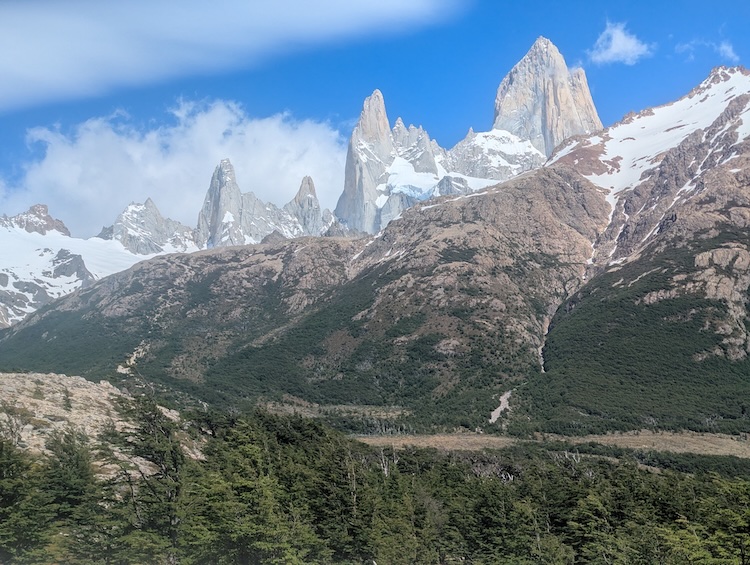
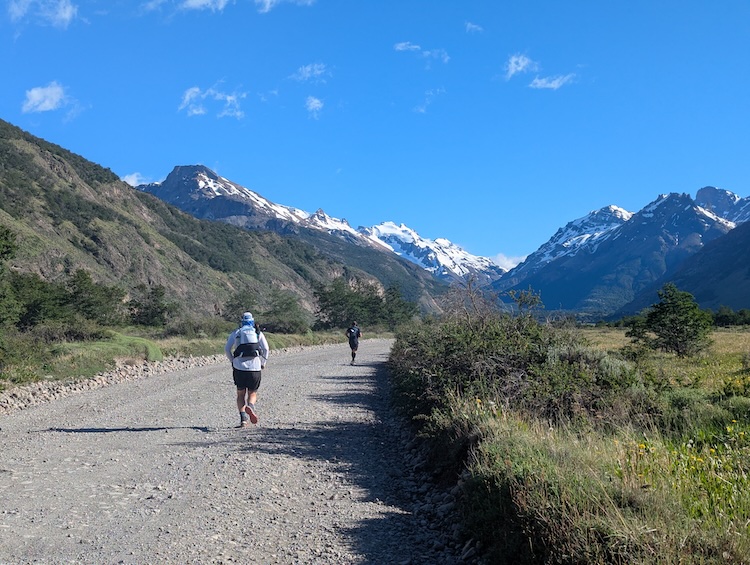
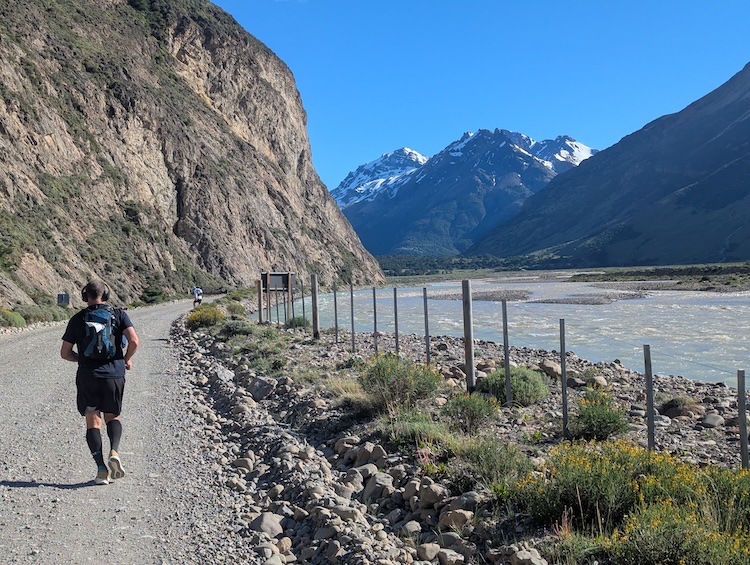
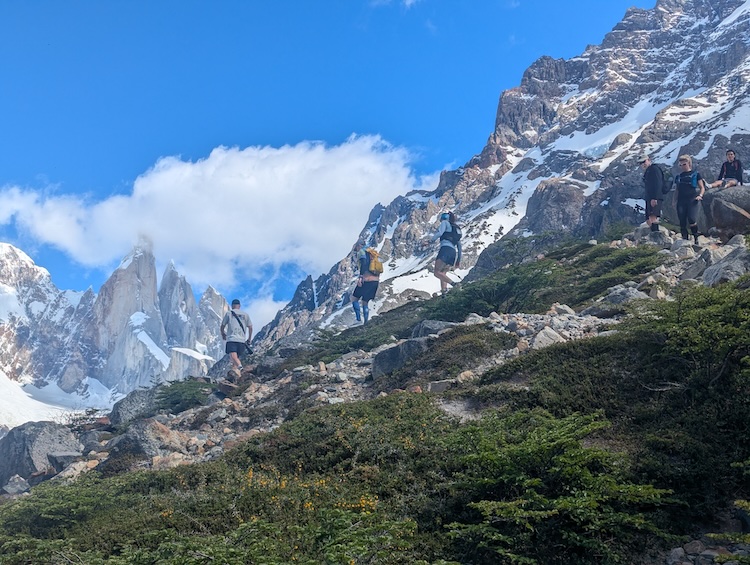
A brief ceremonial countdown from the event organisers and we’re off. Rat Racers trot on eager legs out of town and onto dusty trails that wind they way into the Patagonian wilderness. The snowy peaks of mountains Fitzroy and Cerro Torre slowly reveal themselves as runners splinter into smaller groups or go solo. Deep into the day as my legs are starting to complain the ascent to Glacier De Los Tres begins, and we’re reacquainted with humanity as day-trippers queue to make the climb. My small group and I are happy to take things slow on a tough technical ascent that rewards us will unspoilt views of this brilliant blue glacial giant. It’s the kind of place where you have to stop and take a moment, feeling at once immensely privileged yet small and insignificant. With my head still in the clouds we soon turn and make the descent, which feels no easier than the climb. Touching back down onto fluid trails I divide my attention between soaking up unending beautiful vistas and fuelling fatiguing limbs with trail mix and energy gels.
Some 39km and 930m of ascent later I’m back on the road into El Chaltén, trekking poles giving my flagging feet a boost. I’m quite overcome when, approaching our hostel, I hear the clanging of cowbells and the cheering of early finishers encouraging me over the line. Dinner and beers allow ample opportunity to share the day’s stories; the call to next morning’s breakfast the chance to assess the responsiveness of tired legs. I’d finished 11th out of 36 – not that anyone was counting.
Fatigue accumulation
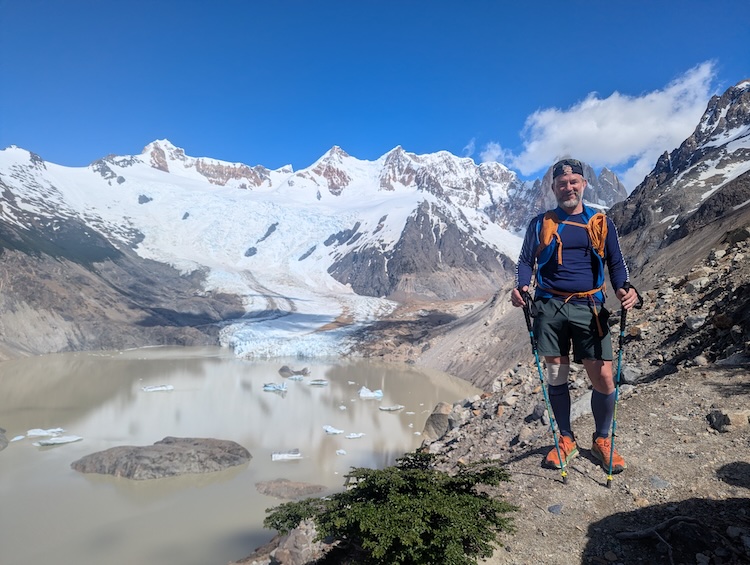
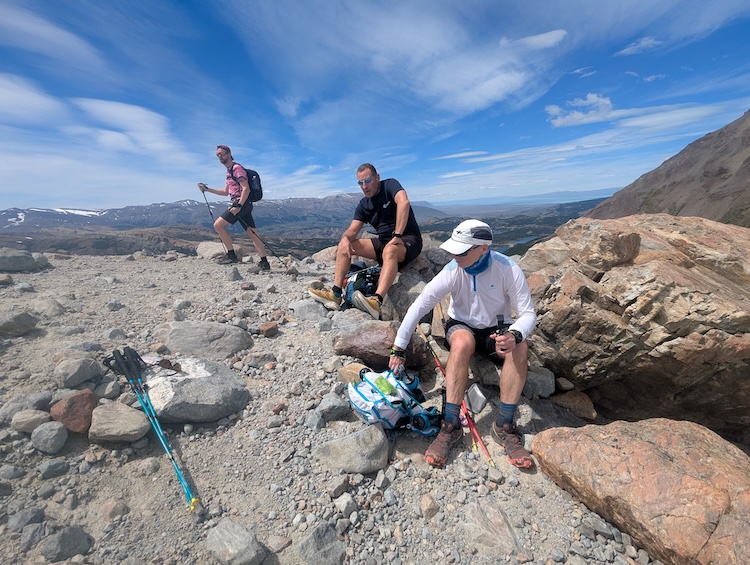
Day two begins with similar enthusiasm, though the trek out of town is noticeably more laboured. This out-and-back loop starts with an immediate climb, though, and the poles are employed early on. Whereas day one’s landscape felt dry, arid and exposed (the infamous Patagonian wind making the first of many appearances), today’s is a little more lush, through sheltered forest glades towards a rugged ridge line trail that brings us up close and personal with Fitzroy once more, as well as the magical Laguna Torre glacier. Reflected in a wide glacial lake festooned with floating ice, I find myself running out of superlatives for this awe-inspiring landscape. Passing other participants on the ridge, our banter already friendly and familiar, it turns out I’m not alone.
Returning after 32km and 750m ascent, we’re all starting to feel the compounding fatigue. But a last dinner at the hostel heralds an early morning departure as we take to the bikes to begin the point-to-point part of the event. We’re all set to cycle some 300km over the four remaining days, beyond our original port of call of El Calafate to the famous Perito Moreno Glacier in the picturesque Parc Nacional Los Glaciares.
Taking to the open road
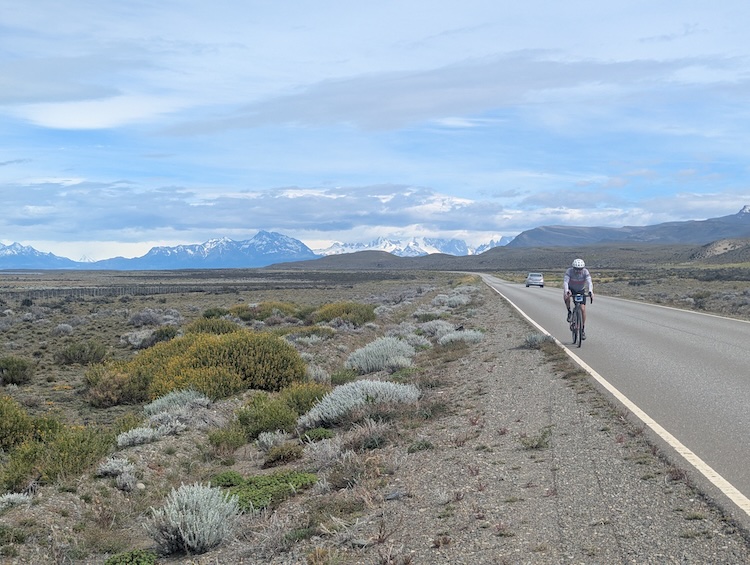
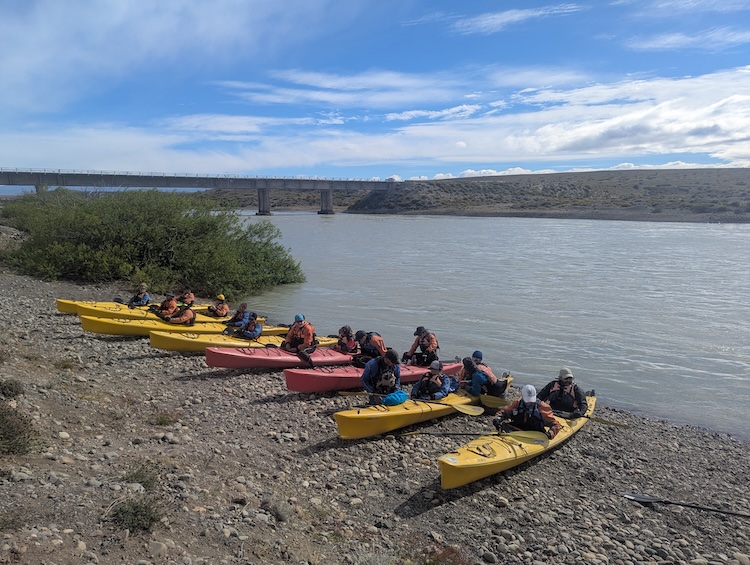
Days of 109km and 89km in the saddle are punctuated by a 75km bike-to-kayak stage, unfortunately cut short due to high winds (no-one begrudges Rat Race’s commitment to our safety). It nevertheless provides a thrilling 15km fast-flowing ride down the chilly grey-blue waters of La Leona – under the watchful gaze of thermal-drifting condors. These are welcome opportunities to challenge different muscle groups and to spin out the lactic acid accumulated during our Fitzroy forays. Road are wide and open, mostly devoid of traffic – though that’s hard to avoid the closer we get to the hub of El Calafate. More often though it’s just clapped-out jalopies or tired-looking tour buses that occasionally pass our echelons, always giving us a wide birth and occasionally a friendly honk of the horn.
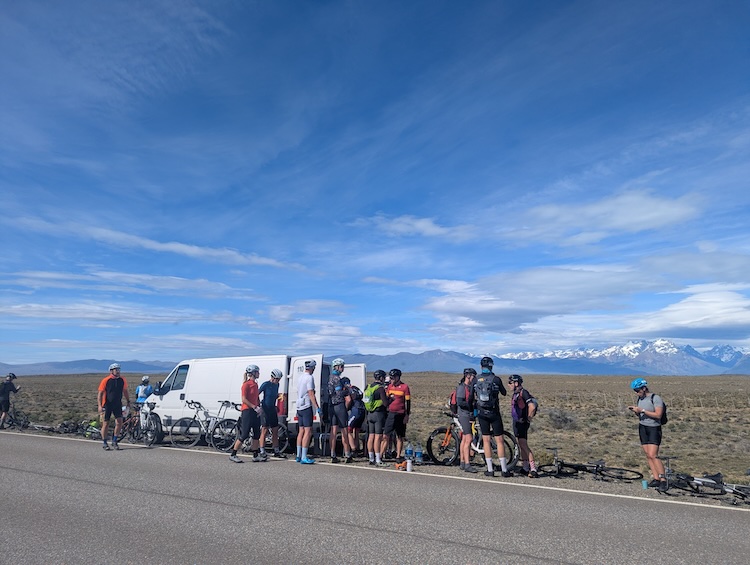
Pit stops are plentiful, with Rat Race’s cheery crew dishing out goodies from bananas and empanadas to cereal bars and sweet treats for those much-needed sugar hits late on in the day. It’s a lovely way to break up your effort too, catching up briefly on the experiences of new-found friends as they enter or leave the feed zone.
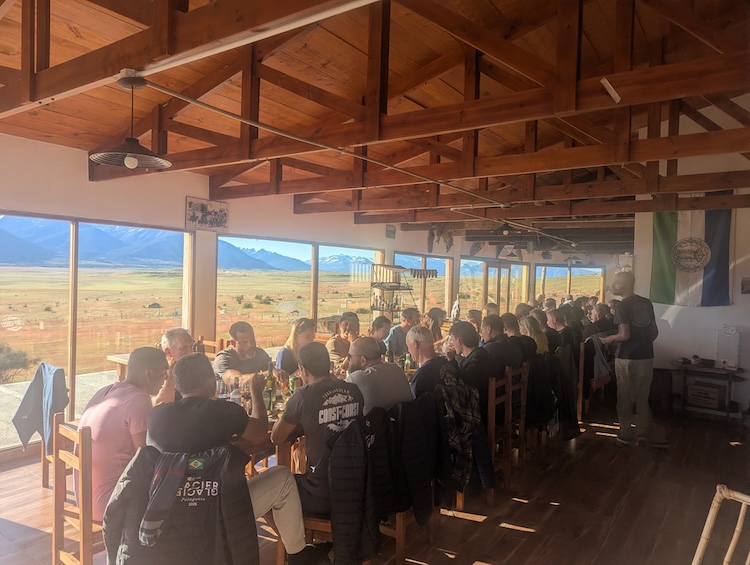
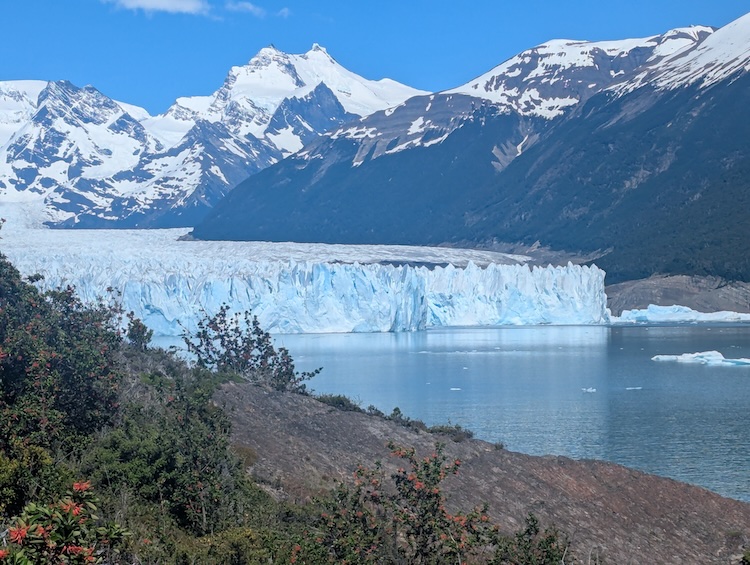
Camping on these nights adds another convivial element to the trip – behind a roadside cafe on day three, a wild riverside camp on day four with the Argentinian support crew whipping up a mouth-watering stew on an open log fire. Day five ends after a gnarly 35km gravel section at Estancia Mitre, a remote farmstead with rooms, and a restaurant that overlooks a panorama of rolling peaks glowing golden in the setting sun. After another sumptuous feast the team – I’m sure we all now consider ourselves that after this unique shared experience – turn their attention to the final day. We’ll enjoy two hours of unprecedented private access to the Parque Nacional before the public roll in – a perfect closed-road denouement that ends in more cheering and cowbell ringing – as well as medal presentations – with the Perito Moreno Glacier serving as a perfect picture-postcard backdrop.
Endings and new beginnings
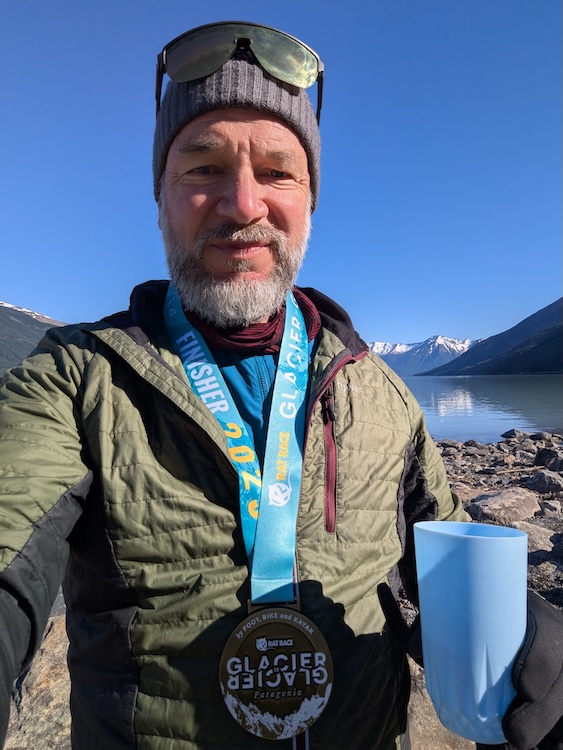
It’s a real mix of emotions as we end our ride to the final glacier of this memorable trip – elation at having traversed this untamed terrain under our own steam; humility in the face of nature’s stark beauty; and perhaps sadness that this life-changing experience has to come to an end. But looking back it’s not so much the end of a glorious chapter as the beginning of an exciting new book – one filled with adventure, discovery and I hope a new-found resilience as I look for my next adventure race. Yes, I’ve definitely been bitten by the bug, as everyone around me on this trip seems to have been at some point. It’s not only friends that have been made for life here, but a healthy habit to keep discovering, pushing and improving – and living life to the full.
What kit to use for multi-sport adventure events
Much of this comes down to personal preference, but I’d recommend supplying your own pedals and saddle when using hire bikes. Comfort is paramount when cycling long distances and any niggling issues will only amplify over time. When trekking over large distances, too, it’s imperative to use well worn-in trail shoes that you know you’ll be comfortable in – with plenty of blister protection in your first aid kit!
More often than not, companies like Rat Race will provide a comprehensive kit list. My advice is, follow it to the letter. These events are often run year after year and the organisers know what will help give you the best experience.
My go-to kit for run/trek stages includes rugged trail shoes like the Scarpa Goldengate Kima RT, compression socks, 2-in-1 run shorts, a buff and a trail vest with options for soft bottles and a reservoir. For cycling stages I’d go for gravel-focused bib shorts with extra thigh pockets like my Rapha Brevet shorts, a short sleeve jersey, arm and leg warmers, a gilet and rain jacket, and one-piece glasses with good coverage, like the Rapha Pro Team Frameless. They were invaluable for Patagonia’s windy and dusty gravel stages.
Bear in mind though that you’ll be spending plenty of time off the trail or the bike, so go for thermal layers. I’m a big fan of merino wool bases, particularly for camping, so opted for Henri Lloyd Merino 200 Zip Top and Merino 200 Pant, which kept me cosy under canvas as the mercury dropped.
Outer layer choices are equally important. During trekking and kayak stages I went for Scottish outdoor brand Keela’s Saxon Waterproof Jacket, while its thermal Solo Jacket was warm, lightweight and compressible – a winning combination for events like these.